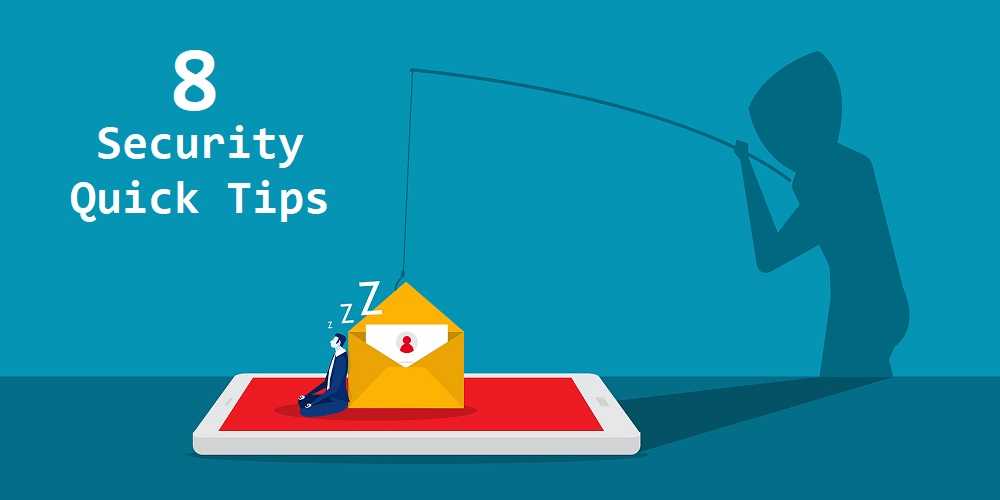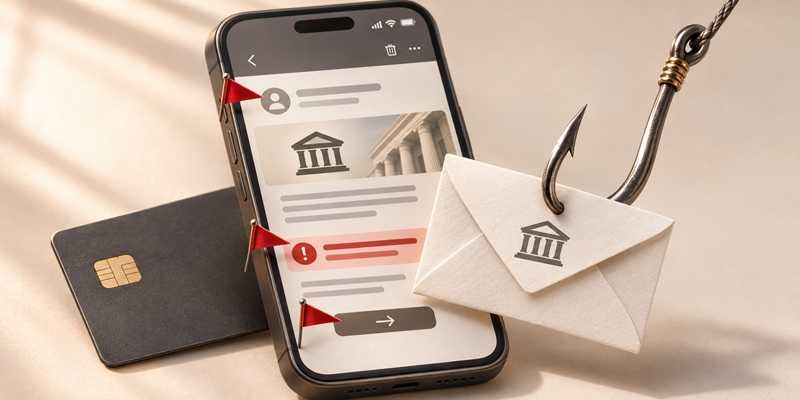
In Part One, we covered how strong, unique passwords help protect your online financial accounts. But even a strong password can end up in the wrong hands if a convincing message tricks you into giving it away.
In Part Two, we’re looking at banking phishing: how criminals impersonate your financial institution, which warning signs deserve attention, and how to check a message without taking the bait.
2
An email appears to come from your bank or credit union. It has the right logo, familiar colors, and an important message about your account. Maybe there’s a suspicious transfer, a payment problem, or information you supposedly need to verify.
The message may be designed to send you to a fake login page or get you to call someone posing as a fraud specialist. Once criminals have your credentials or security codes, they may attempt to access your account and move your money.
A professional appearance is easy to copy. What matters is the request and how you verify it.
2
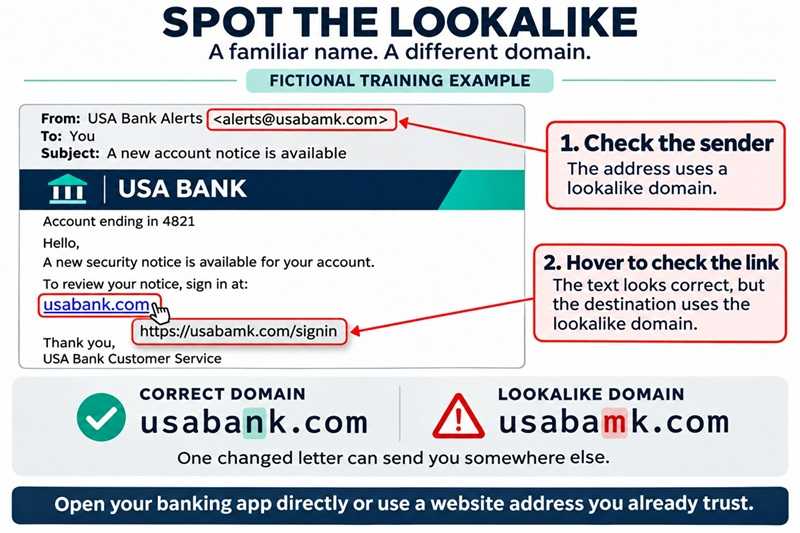
An email can display your financial institution’s name while coming from an unrelated address. Expand the sender details and look for misspellings, extra characters, or an unfamiliar domain.
Keep in mind that financial institutions may use different addresses for different services. An unfamiliar address deserves investigation, but the address alone doesn’t settle whether a message is legitimate. A familiar-looking address isn’t a guarantee, either.
If the message involves your money or account access, check through your institution’s official app, website, or a trusted phone number.
2
“Your account has been locked.” “Unauthorized transfer detected.” “Respond immediately to prevent a loss.”
Criminals use alarming messages to make you act before you think. Legitimate fraud alerts can also be urgent, so the safest response is to verify the warning independently.
Open your banking app directly or call the number on your card or statement. Avoid using a link or callback number from the suspicious message.
If someone calls claiming to be from your financial institution, remember that caller ID can be faked. You can hang up and call the institution yourself.
2
Poor grammar, awkward wording, and misspellings can still be warning signs. But phishing messages may also be polished, personalized, and free of obvious errors. Artificial intelligence makes convincing messages easier to produce.
Pay attention to what you’re being asked to do. Be especially cautious of unexpected requests for passwords, PINs, one-time login codes, or approval of a sign-in you didn’t initiate.
2
An unexpected refund, prize, inheritance, or deposit can be tempting. Be suspicious if receiving it requires you to provide banking credentials or pay a fee.
Check the claim through the organization’s official website or a trusted phone number. Don’t let excitement about unexpected money rush you into sharing information.
2
Use a strong, unique password for your banking account and enable multi-factor authentication. Turn on account alerts and review your transactions regularly.
If you’ve already shared login information or a security code, contact your financial institution immediately through a trusted number and change the affected password. Tell the institution exactly what happened so it can help secure your account.
You don’t have to recognize every clever scam. Making a habit of pausing, opening your banking app directly, and verifying unexpected requests can keep a convincing message from becoming a costly mistake.
For banks and credit unions
Share this article with your members
Copy a ready-made summary and link for your newsletter, website or social posts.