
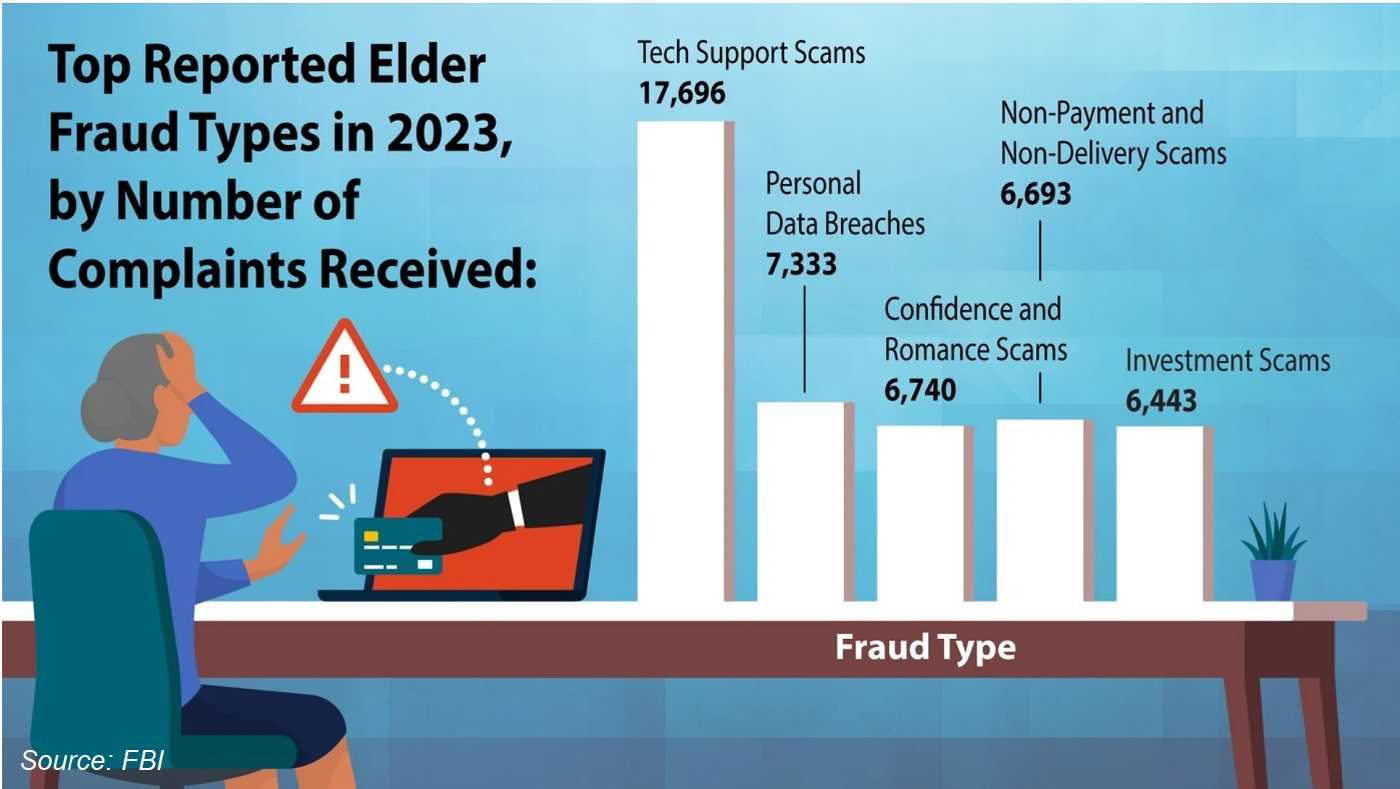
For many online scammers, those in retirement are a target ripe for the picking. The FBI reports retirees aged 60 years and older in the U.S. lost over $3.4 billion to scammers last year—an 11% increase from the year before. Here’s a closer look at common retirement scams and how to know one when you see one…before it’s too late.
2
What retiree (or anyone else) wouldn’t love the idea of a low-risk, high return investment? The scammer knows the right things to say to win a victim’s confidence, banking account information, and their money. The investments either don’t exist or are not at all what they appear to be.
2
Scammers phish for personally identifiable information (PII), and using legitimate entities like a bank or credit union, government agency, or other trusted source is common. The emails and text messages often demand an urgent response, which may result in a threat if action isn’t taken. Trusting the message, victims respond with their Social Security number, banking and credit card info., and other valuable PII.
2
A quick cash advance instead of waiting for future pension payments is a tempting proposition for some retirees. That’s what the scammer promises, but they also deliver insane fees and interest rates for the payout, quickly draining a victim’s retirement funds.
2
Heartless crooks that they are, retirement scammers are all about gaining a victim’s trust. They know this demographic often lacks tech-savvy necessary to navigate many of today’s tasks, are unfamiliar with the latest scam tactics, and are likely to trust others. Below are tips to help prevent a retirement scam from taking root—for you and your loved ones.
- Approach any money-making opportunity with a healthy dose of skepticism, especially when it sounds too good to be true.
- Always verify an investment opportunity is legitimate before committing. You should always have time to do some research. If not, consider it a scam.
- Ask a trusted financial advisor or family member for their thoughts. Sometimes, they notice something that you may have missed, especially if you were made to feel rushed.
- Keep up-to-date on the latest scam and fraud tricks using trusted sources for information.
For banks and credit unions
Share this article with your members
Copy a ready-made summary and link for your newsletter, website or social posts.