If your pre-vacation checklist includes sunscreen, flip-flops, and a quick Google search, scammers are hoping you’ll add one more thing: an unnecessary fee. A growing “entry form” scam is tricking travelers into paying hefty fees for a document that’s completely free. These slick, lookalike websites appear at the top of search results, creating urgency just as vacationers rush to finalize travel plans.
Authorities in St. Maarten are warning travelers about the scam involving the island’s Embarkation/Disembarkation (ED) card. The form is mandatory for visitors, but unlike what this scam purports, it’s completely free on the official government website. The scam has traveled to Barbados, Dominica, and St. Lucia.
Fraudsters, however, have built convincing copycat websites that mimic the real portal. These sites often appear as sponsored search results and offer to “process” or “expedite” the form, for a price, of course. In some cases, travelers have been charged up to $139.99 per person for something that takes just minutes to complete at no cost.
The trap works because it feeds on urgency and anxiety of travelers. Airlines remind passengers to complete the ED card before arrival, and in that last-minute scramble, many click the first link they see—assuming it’s official. That’s when the digital pickpocket strikes.
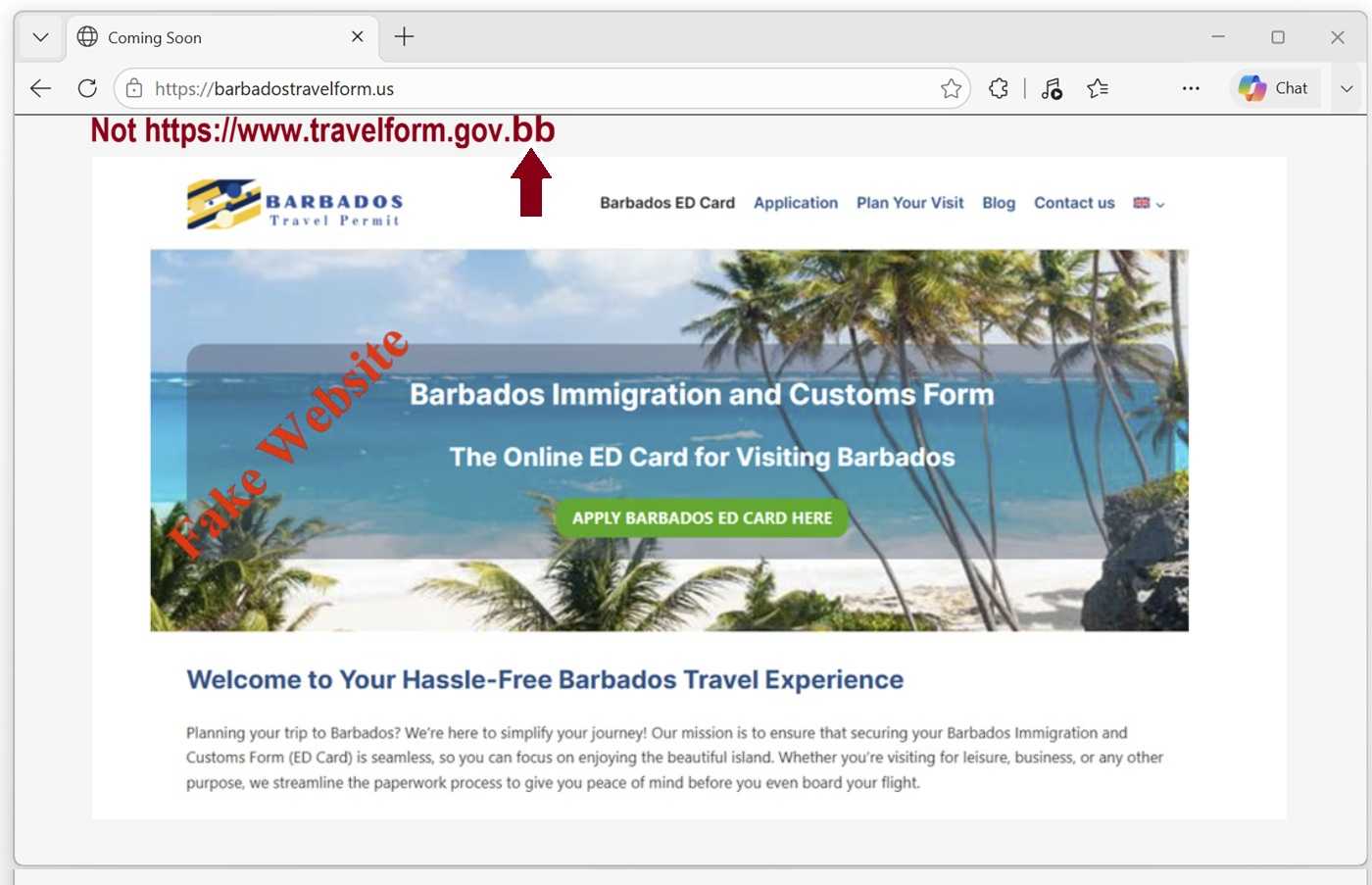
Officials stress a simple rule: if a website asks for payment to submit the ED form, you’re in the wrong place. It’s likely other travel destinations are also on the hackers’ lists, so be on the lookout no matter where you decide to holiday.
To stay safe, travelers should navigate directly to the official government site rather than relying on search results, avoid sponsored links offering “assistance,” and contact their bank immediately if they suspect they’ve been charged.
For banks and credit unions
Share this article with your members
Copy a ready-made summary and link for your newsletter, website or social posts.