
Artificial intelligence is changing the way we work, communicate, and even manage our finances. Unfortunately, it is also changing the way cybercriminals carry out scams.
Financial institutions and cybersecurity experts are warning that criminals are increasingly using AI to create phishing emails, fake websites, and convincing text messages that are much more difficult to recognize than the poorly written scams of the past.
Instead of sending generic messages filled with spelling mistakes, today's scammers can use AI to generate professional-looking emails that mimic the language, logos, and writing style of banks, credit unions, credit card companies, and investment firms. Some criminals are even using AI-powered chatbots to carry on realistic conversations with victims, making fraudulent customer support interactions appear legitimate.
Perhaps even more concerning is the rise of AI-generated voice cloning. Criminals can create a convincing copy of someone's voice using just a short audio sample found on social media or in an online video. Victims may receive what sounds like a phone call from a family member, banking representative, or company executive asking them to transfer money or reveal sensitive information. In reality, they are speaking with a scammer using AI to impersonate someone they trust.

Researchers say AI is also helping criminals personalize their attacks. By combining information gathered from social media, previous data breaches, and public records, scammers can create messages that include your name, employer, recent purchases, or financial institution. These details make fraudulent communications appear far more believable and increase the chances that someone will click a malicious link or provide account credentials.
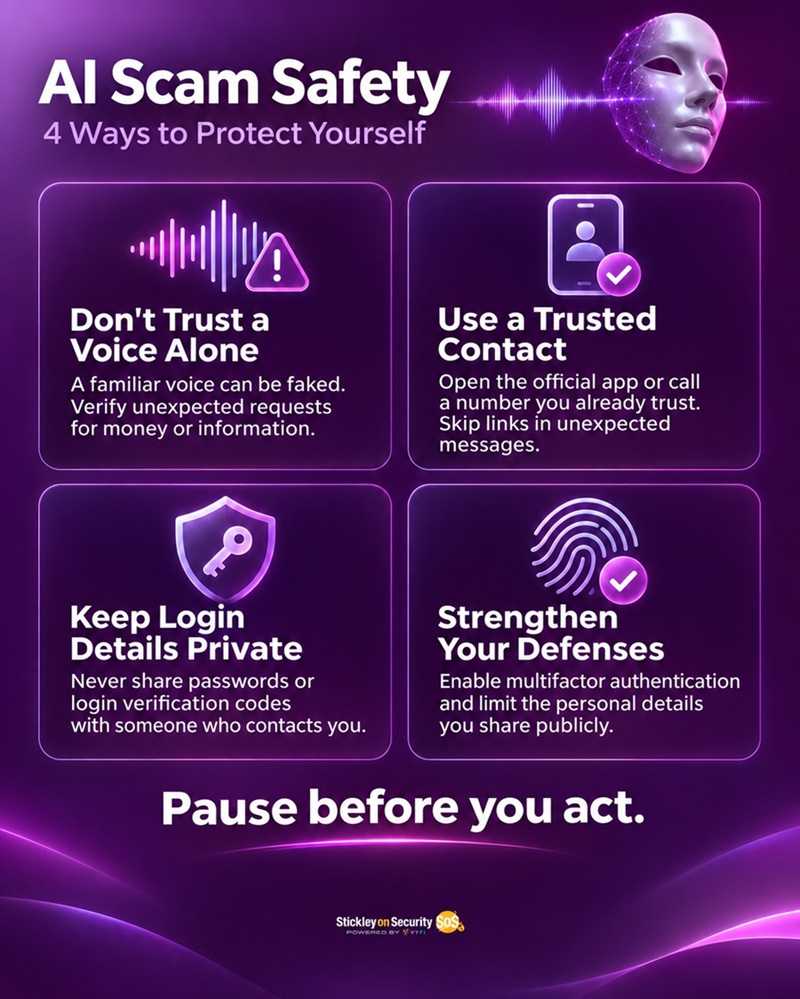
Fortunately, the same advice that has helped prevent scams for years is still effective.
Never click links or call phone numbers included in unexpected emails or text messages claiming to be from your financial institution. Instead, type the web address directly into your browser, use a trusted bookmark, or use its official mobile app. If you receive a suspicious phone call, hang up and contact the institution using the number printed on the back of your payment card.
It is also wise to enable multi-factor authentication on your financial accounts whenever possible. Even if a criminal manages to steal your password, an additional verification step can often prevent unauthorized access.
And try to limit what you share on social media and even on business networking websites. The more that is out there, the more that AI can gather about you.
Artificial intelligence is making scams more convincing, but it hasn't changed one important fact: criminals still rely on getting people to act before they have time to think. Taking a few extra seconds to verify a message, phone call, or request for money remains one of the most effective ways to protect yourself and your finances.
For banks and credit unions
Share this article with your members
Copy a ready-made summary and link for your newsletter, website or social posts.