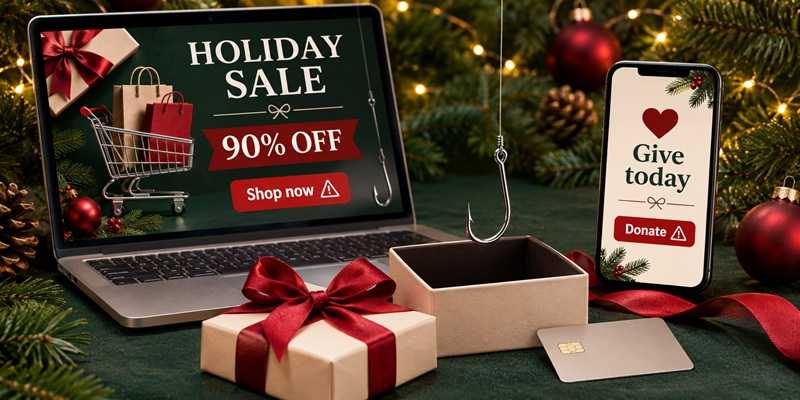
The holiday shopping season is here, and while shoppers are busy hunting for bargains, scammers are busy hunting for shoppers. Black Friday and Cyber Monday bring a flood of tempting deals, while Giving Tuesday gives criminals another opportunity to take advantage of people’s generosity. Before you open your wallet, make sure you know what to watch for.
Fake shopping websites, phony advertisements, counterfeit merchandise, and phishing emails flourish during the holiday rush. A November 2025 Joint Economic Committee minority report cited an increase of more than 2,000% in phishing emails impersonating major retailers during peak holiday shopping periods in 2024.
2
Scammers create fake websites that look remarkably similar to legitimate retailers, advertising popular products at unbelievable prices. Others send emails or text messages claiming you’ve won a prize, received an exclusive discount, or need to resolve a payment or delivery problem.
Fake package-tracking notifications are another favorite. One click could take you to a fraudulent website designed to steal your personal or payment information. Check deliveries through the retailer’s or shipping company’s official website or app instead.
Before buying, check the website address carefully and research unfamiliar sellers. Rather than following links in unsolicited messages or unfamiliar social media advertisements, visit the retailer directly.
When possible, pay with a credit card, which offers protections for disputed purchases. And remember: a padlock symbol or “https” in the address means the connection is encrypted. It does not prove the seller is legitimate.
2
Giving Tuesday falls on December 1, 2026, and encourages people to support charitable organizations. Unfortunately, scammers see it as an opportunity, too.
Criminals create fake charities, imitate legitimate organizations, and send emotional appeals asking for immediate donations. Some even use names nearly identical to those of well-known charities.
Before donating, research the organization through resources such as CharityWatch or the BBB Wise Giving Alliance. If you want to check whether a contribution is tax-deductible, use the IRS Tax Exempt Organization Search. Tax-exempt status alone does not tell you how effectively a charity uses donations.
Visit the charity’s official website directly rather than following links in unsolicited messages. Paying by credit card or check is generally safer. If someone insists you donate using gift cards, cryptocurrency, or a wire transfer, treat that demand as a major warning sign.
2
Slow down before clicking, buying, or donating. Be suspicious of extreme discounts, urgent requests, and unexpected payment demands. Turn on banking alerts, monitor your accounts, and use strong, unique passwords and multifactor authentication.
The FBI says non-payment and non-delivery scams accounted for more than $503 million in reported losses during 2025. That figure covers the entire year, not just the holiday season.
A little caution can go a long way. Whether you’re shopping for gifts or supporting a worthy cause, make sure your holiday generosity doesn’t end up funding someone’s criminal enterprise.
For banks and credit unions
Share this article with your members
Copy a ready-made summary and link for your newsletter, website or social posts.