Impersonation scams have exploded—and we’re not talking about your buddy doing a bad Elvis impression. According to the Identity Theft Resource Center’s latest 2025 Trends in Identity report, these scams have shot up a whopping 148% and are now the most-reported identity crime. The scammers? They’re posing as banks, tech support reps, and even your own family. The scary part? They’re convincing—way too convincing.
There is no shortage of examples of these, but here are a couple.
In one currently circulating scam, crooks send texts claiming to be from Amazon, warning you that someone’s placed a suspicious charge on your account. You panic, tap the link, and BAM—they’ve got your login credentials, your payment info, and maybe even remote access to your device if you follow all the fake “security steps.”
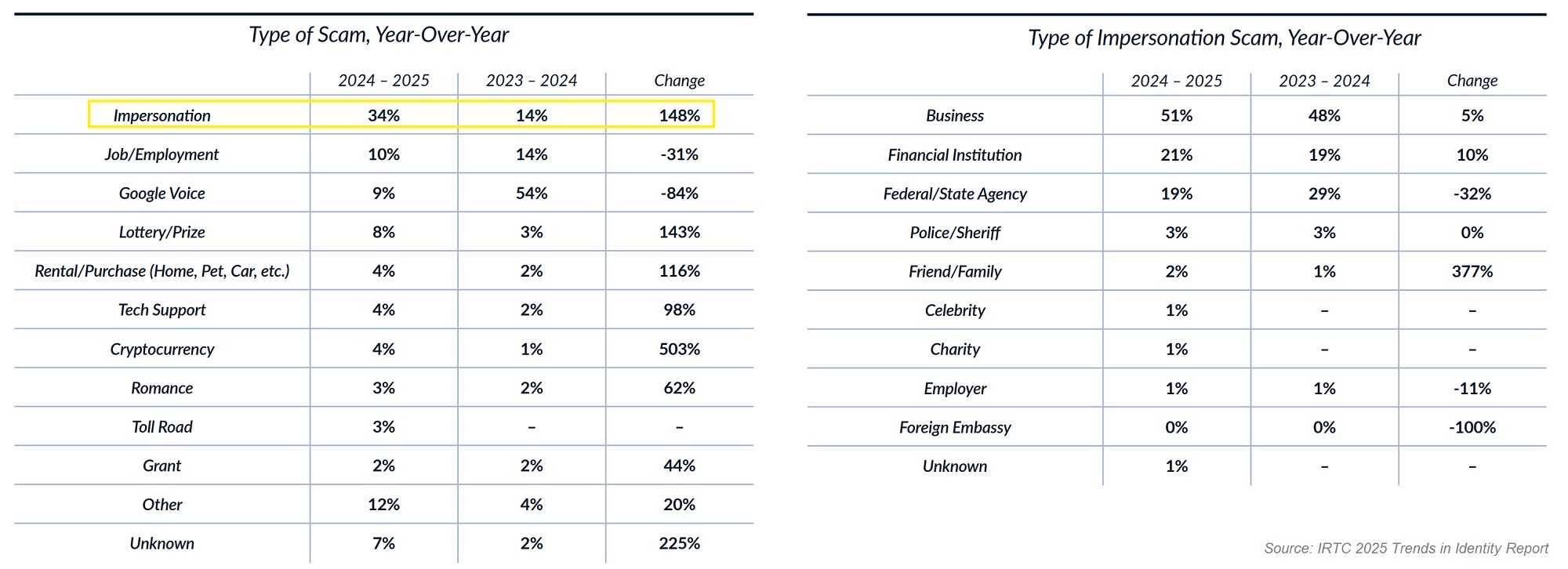
Then there’s the government impersonation twist: you get a call from someone claiming to be from the Social Security Administration, saying your number has been “linked to criminal activity.” They tell you to verify your identity—just a little birthday and SSN “for security.” And just like that, they’ve got the keys to your identity.
Impersonation scams work because they hit you where it hurts—your money, your fear, your sense of trust. And thanks to AI, these fakes are sounding smoother than ever.
2
- Never click a link from a text unless you were expecting it—and even then, double-check.
- No legitimate agency will ever ask for your full SSN, bank login, or password by phone.
- Hang up. Call back using the official number—not the one they give you.
- If you’re made to feel rushed into a choice or the offer sounds too good to be true, you can bet it’s a scam.
Bottom line? If someone claims to be someone you trust… verify before you comply
For banks and credit unions
Share this article with your members
Copy a ready-made summary and link for your newsletter, website or social posts.