
Web surfing comes with risks; some high and some low. If you click on advertisements you see on the web pages you visit, your risks may have gone up in recent weeks. Within the past couple of weeks, over 10 million people who click on advertisements may have been infected with malware. Yahoo.com and its celebrity, sports, game and finance sites have all been under attack by a cybercrime group looking to spread ransomware to lock up your computer.
 This current attack, according to Malwarebytes, began on July 28th and is still in effect. Yahoo is working with its add serving company E-planning to resolve the issue. The crime ring is infecting machines through an exploit kit called Angler by inserting it into some web ads that attract a lot of consumers. An exploit kit is a software package that searches for vulnerabilities on the infected computer. If something is found, it will try to deliver malware.
The malware exploits older versions of Adobe Flash running on Windows PCs. In order to avoid this type of issue, make sure your computers are always up-to-date with the latest patches and software versions. In addition, make sure anti-malware is installed and the files are updated on your computers and mobile devices. Remember that you have to update each browser you use separately. Also make sure your pop-up blocker is active and consider installing ad blocking software on the browsers you use. Below is the scary popup that the Malwarebytes will display when a user clicks on an infected ad.
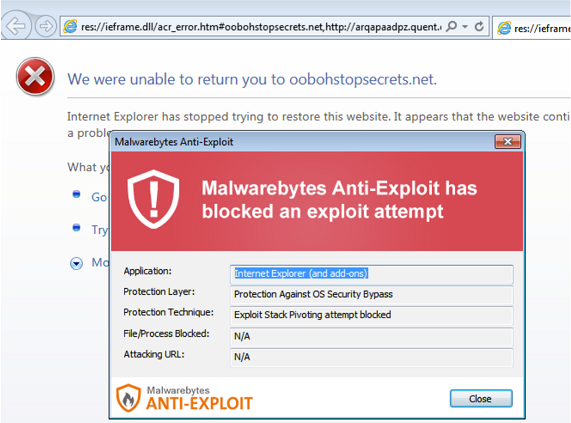
These malicious ads work by redirecting the user to a different and fake website that is infected with malware. Angler is being called the most advanced exploit kit being used today by hackers. It targets vulnerabilities in Adobe’s Flash Player and Microsoft’s Internet Explorer and Silverlight products.
For banks and credit unions
Share this article with your members
Copy a ready-made summary and link for your newsletter, website or social posts.