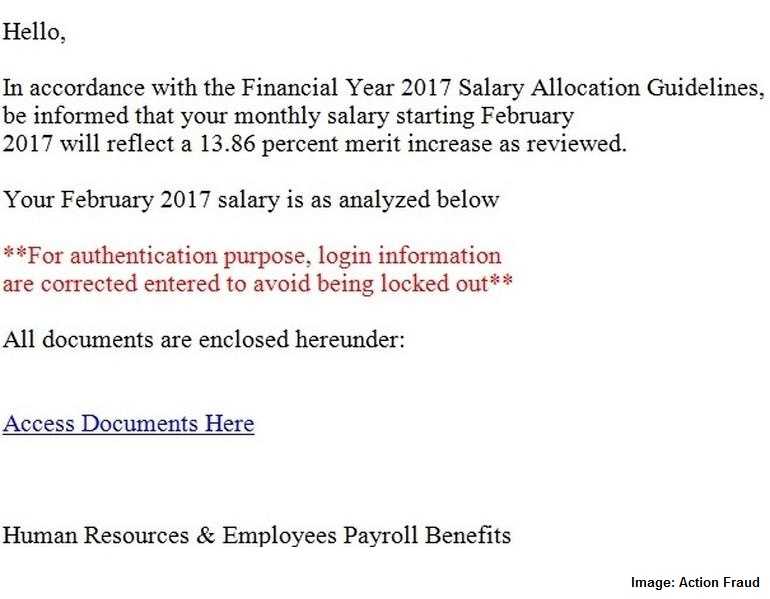
The scammers are still hard at it trying to steal account login details and other personal information. In the latest scam, university staff members are targeted with an email message informing them that they will be offered a pay raise in the very near future. However, to get that extra cash, they need to “authenticate” their accounts.
This scam doesn’t just stop at authentication. It even claims that the targets must do this to avoid being “locked out.” Presumably this means locked out of the account. A message arrives looking as if it came from the human resources department. If the included link is clicked, it directs to a fake website that requests the user’s university login credentials and financial details.
Any time an email arrives in your inbox that wants you to verify something in your account, don’t click links or open attachments. Instead, go into your account using a bookmarked link or by carefully typing the name of the website into the address bar.
In this particular ruse, the wording is atrocious. That should be a dead giveaway that it’s phishing for information. The text provided in one example is “For authentication purpose, login information are corrected entered to avoid being locked out.”
While this attacker (or attackers) isn’t very good at fooling his targets, other phishing scams of late have become quite creative and “authentic.” A recent one is using an HTML document, rather than DOC, PDF, or XLS to bypass security software and attempt to steal banking account details. Another one cleverly changes the font of “p,” “u”, and “w” to Greek characters so that content filtering products don’t detect phrases such as “we will suspend your account.” These are often used in account verification phishing attacks and get filtered out by such products.
 If you have fallen victim to this one or one like it, immediately change any passwords that were entered into the fake sites. In addition, if you reuse passwords on multiple online accounts (which is strongly discouraged), change those passwords as well.
The pay raise scam isn’t limited to university employees. It also targets employees at government and law enforcement agencies.
For banks and credit unions
Share this article with your members
Copy a ready-made summary and link for your newsletter, website or social posts.