There are a couple of recently sighted phishing emails making rounds. Both are phishing and using names of well-known companies. The information requested in both should also not be provided, as it will go to cybercriminals.
One purports to be from Cox Communications claiming the details of your account were changed and they need to be verified. The subject is something to the effect of “unauthorized sign in” on your account. The other is claiming to be from Microsoft and that your Office 365 account needs verification immediately or it will be deactivated. The subject of this, like the Cox message, is also designed to give a sense of urgency and may be something like “Final Notice.”
The Microsoft one looks a bit more realistic than the Cox message, due to fewer mistakes, but both are real enough that someone in a rush could be caught off guard. Both are also fake enough that someone taking the time to read them will discover they are phishing.
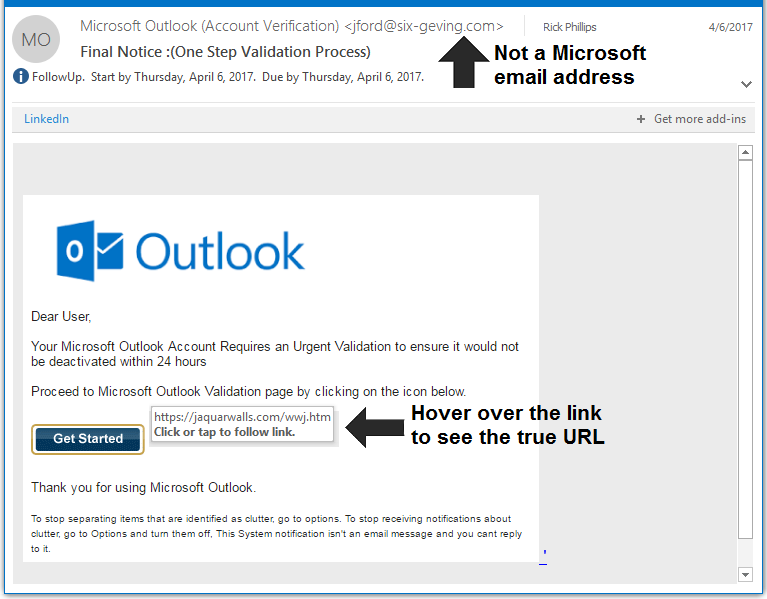
They are written in ways to cause the reader to make a quick reaction and click a link to “verify” the accounts and are written with intent to steal login credentials.
 It is always important to be certain a link or attachment is legitimate before clicking on them. If they are unexpected or sent from unknown senders, it’s best to just delete them. However, if needed, contact the sender by phone, text, or separate email to verify before taking any action. If you are calling or emailing, make sure to get the phone number or email address from the website directly, as opposed to using any information provided in an email message.
Also remember that if a company is emailing you, the sense of immediacy is not so much that you can’t take some time to ensure your security before replying. The extra few minutes it will take to confirm the information is real will not affect your status at all.
That sixth sense is of great value when dealing with phishing. If there is any doubt what-so-ever about an email message you receive, it’s probably with good reason. Always err on the side of caution and confirm first or just delete it. If it’s that important, the company will most certainly contact you again and it will be by the postal service.
For banks and credit unions
Share this article with your members
Copy a ready-made summary and link for your newsletter, website or social posts.