The Identity Theft Resource Center (ITRC) has been tracking security breaches for over a decade; since 2005 to be precise. It has released statistics related to these, which are attention catching to say the least. Since it started, it has tracked over 7,700 breaches resulting in unauthorized access to well over 900 million records. Recently, it released a report with just the statistics for the first half of 2017 and it doesn’t look good for identity theft.
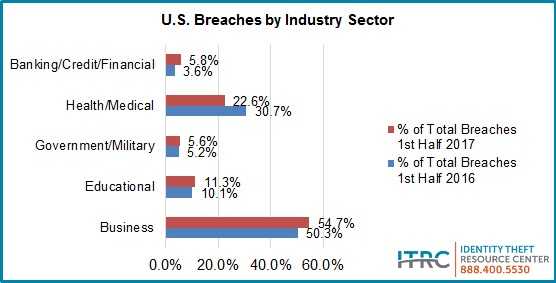 Since January 1 of this year, there have been 791 breaches. The majority have occurred within just five industries: Business, healthcare/medical, military/government, education, and financial.
Here is what they found:
- The healthcare/medical industry took the lead with 22.6% of them, totaling 179 just in that area.
- Hacking (as opposed to accidental exposure, insider theft, physical loss, negligence, etc.) accounted for 63% of them. Included were phishing attacks at 47.7% and malware at 18.6%.
- Social security number (SSN) theft was included in 60% of these incidents.
- Kansans suffered the most loss in this way with 12.4 million (38.8%) people having their information exposed.
- California had the most in number of breaches with 110.
 What this means for everyone is that we should be proactive as much as possible to protect our own information. While we cannot control what happens once we provide it to someone, we can take some steps to keep our eyes on it.
- Order your free annual credit reports every single year. Each of the three major credit bureaus will provide one, so stagger when you order them. If you get one every four months or so, you can react to suspicious activity quicker.
- Keep a close eye on your payment card charges and account statements. Check them as often as you can and report anything that looks like it may be fraudulent to your financial institution immediately.
 Never provide your confidential or sensitive information such as SSNs or account numbers to anyone unless you are 100% positive it is safe and that they really need that information. It is rare these days that anyone needs your SSN and if you don’t initiate a phone call to make a purchase, for example, don’t provide any payment details.
- Never send sensitive information via email. This is not a secure form of communication. Assume that if it’s sent in an email, everyone in the world can access it.
 Remember that government agencies (such as the IRS) will not email you asking for sensitive details or payments. Any initial contact from them will come via the U.S. Postal Service.
- Always be wary of opening attachments or clicking links in email messages that come from unknown senders, are unexpected, or just seem suspicious. If you have any doubts, don’t even be tempted and possibly contribute to that 47.7% phishing statistic above.
The ITRC isn’t projecting positive numbers for the whole of 2017. It has estimated that data breaches will increase over 2016 by 37%.
For banks and credit unions
Share this article with your members
Copy a ready-made summary and link for your newsletter, website or social posts.