There are some very creative cybercriminals out there. One (or perhaps a group) has come up with a little extortion scam that goes back in time and uses regular old-fashioned snail mail as a starting point. Whoever it is then combines that old communication method with a new payment form to get paid, in the form of Bitcoin. Otherwise, as is claimed, details about the victim’s sordid extramarital love affair will be divulged not only to the spouse, but to her family and friends too.
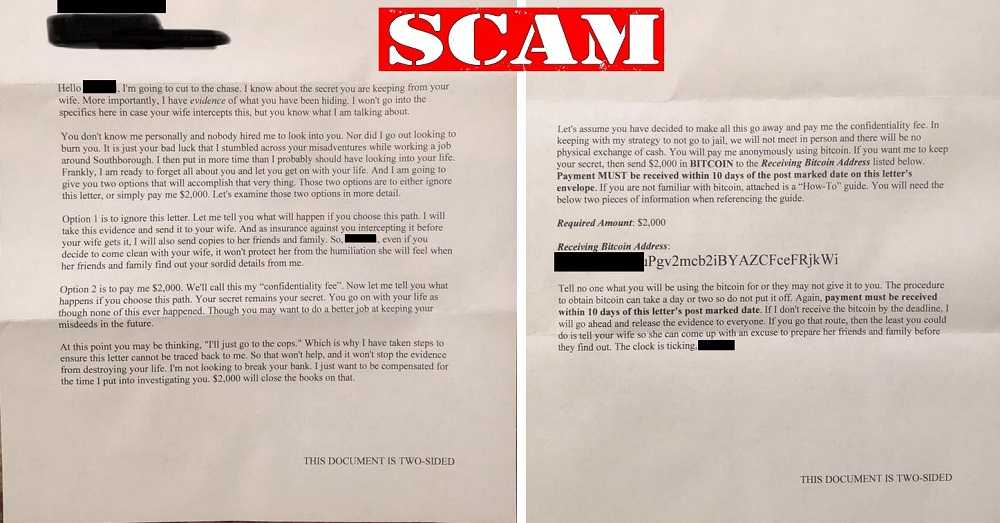
 A reader of the security blog KrebsOnSecurity sent in a letter from a friend who received one of these letters in the mail. It was very well crafted and detailed. It included the recipient's name, made references to the hometown, obviously included the correct physical address, and demanded a $3,600 Bitcoin payment to keep the affair under wraps. The extortionist also claimed to have evidence that could be provided to whomever he or she chose to send it.
A threat is included that if the money isn’t received within 12 days of the letter’s postmark, the alleged evidence will be distributed in such a way that the husband cannot intercept it and keep the behavior secret.
In this case, the recipient of the letter had nothing to hide and this is most likely just someone randomly sending letters hoping to take advantage of someone’s guilty conscience, without really knowing if any of the behavior occurred. And even though it’s unknown how the extortionist retrieved all the details on the targets, it is always wise to limit information posted on social media profiles. Consider whether it’s necessary to put certain information, such as your mailing address out there for everyone to see. Also remember, that even if you limit who can supposedly see what is on your profile, you should always consider anything you put on the Internet, secured for friends only or not, available to everyone who has internet access.
Sending extortion letters via the U.S. Postal Service is mail fraud and carries penalties that are not insignificant, including up to 30 years in lockup. However, the envelopes have no return address and unless authorities can get DNA or some other incriminating evidence off the envelopes, it’s unlikely this person or group will be caught.
Should you receive a letter like this one or any extortion letter, report it to local law enforcement. It’s possible that they can get some sort of evidence off the envelope and track down the person or people doing this. It also starts to create a history and even if it’s years down the road before they come up with something, there is still a chance justice can be done.
It’s unclear how widespread this scam reaches. Brian Krebs, who writes the blog only found one other targeted area for this, but if it’s working at all there will be others.
For banks and credit unions
Share this article with your members
Copy a ready-made summary and link for your newsletter, website or social posts.