
Last year saw an incredible jump in the use of bad bots (internet or web robots) and the botnet. Bots spread information like wildfire, faster and easier than any human can do on his or her own. Although, not all bots are bad, a report by the Spamhaus malware division finds a 40%+ jump in botnet servers by cybercriminals and an overall increase of 90%+ since 2014. The word “bot” entered mainstream recognition when U.S. investigators discovered that Russian bots were messing around in the 2016 U.S. presidential race. Americans learned that Russia employed bots in hopes of undermining and influencing on that election. If only those Russian bots were the sole bad actors in cyberspace…
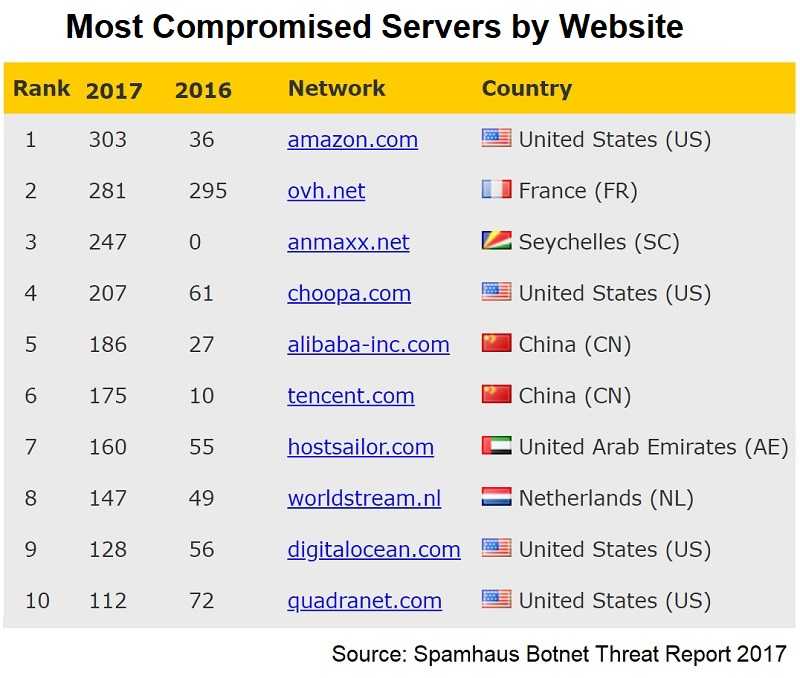 According to the Spamhaus Botnet Threat Report 2017, the U.S. tops the botnet list of hosting countries, with Russia a close second. The most effective of which easily spread to millions of computers worldwide, with vulnerable U.S. systems being hardest hit.
Bots, the botnet, and the cybercriminals who use them are having incredible success poisoning networks and individual users with a range of malware. Botnet cybercrime often uses anonymous browsers like Tor and Ghostery, with new and improved clandestine search engines popping up every day. It’s a match made in the underworld for those on the receiving end of bot threats.
The Spamhaus report also finds “The majority (6,588 or 68%) of botnet controllers…in 2017 were hosted on servers that had been ordered by cybercriminals for the solely purpose of hosting a botnet controller. Of course, cybercriminals do not use their real names to order infrastructure for botnet operation: they conduct so-called fraudulent sign-ups, using a fake or stolen identity.” When one of these if found, it goes on a list that is known to be set up specifically as a botnet controller and is flagged in security software. Unfortunately, in 2017 this list grew by 40% over 2016.
Internet security technology still has some work to do to really step up to the plate and knock bad bots out of the Internet park. Until that happens, companies, institutions, and everyday users need to beef up their own cybersecurity. Keeping security software updated along with a common-sense approach to your own internet traffic–like not falling victim to phishing email and using secure passwords are the best defense. Until technology fires back at bots, it’s an “every person for themselves” approach to internet security.
For banks and credit unions
Share this article with your members
Copy a ready-made summary and link for your newsletter, website or social posts.