
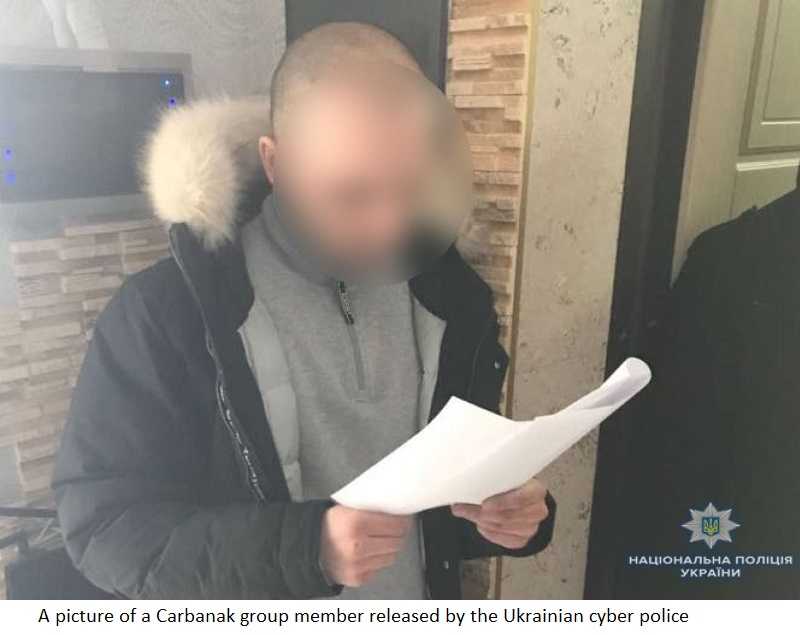
Earlier this year, the Spanish National Police arrested the alleged head of notorious Carbanak cybercrime group. Experts warn the confinement of the Carbanak kingpin will not stop the proliferation of the group’s highly successful spear-phishing campaigns. The malware strains are still out there, becoming more refined and more powerful with time. Over 40 countries and their financial systems have been attacked by the Carbanak group. The kingpin’s arrest was largely due to cooperation among law enforcement around the world.
 Since 2015, the Carbanak syndicate gained notoriety as a highly effective cybercrime ring targeting financial and banking institutions and e-payment systems worldwide. Their haul is believed to have hit the $1 billion mark as of this year. Perhaps Carbanak’s most aggressive malware, Cobalt, allowed its members to steal 10 million Euros per heist. Last year, it was discovered the group switched targets from the financial arena to retail, restaurants, and hospitality services.
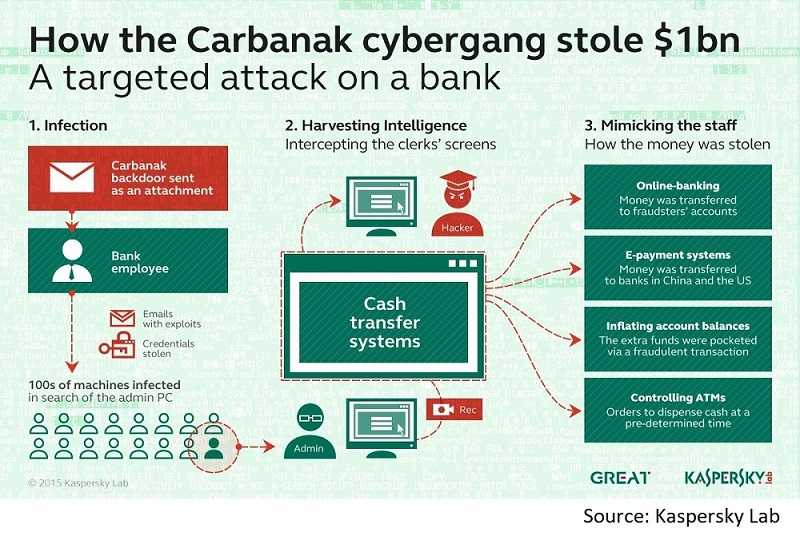
Since its inception in 2013, Carbanak grew to refine its malware-laced spear phishing hacks. The group would send these malicious attachments in emails to bank employees. Once the employees acted on the attachment, Carbanak was in motion. Their malware infects the network, allowing them to control ATM’s and e-payment networks. A group member would be at a pre-determined ATM at a specific time and receive a payout anyone would envy. They also hacked financial e-payment systems, easily transferring funds to their own criminal accounts. Carbanak also helped themselves to bank accounts and other financial data like credit and debit card numbers. In fact, their model is so successful that other cybercriminals are using it for their own hack attacks. In November, a group called Silence was discovered to have very similar traits to Carbanak. Experts know other hackers are using Carbanak and their gang model for their own gain. Other strains of Carbanak’s malware are still out there and getting stronger.
The one given the group and other phishing hacks count on for success is human vulnerability, or gullibility.
Groups like Carbanak count on unsuspecting employees getting tricked by very slick emails. From there, it unleashes a malware virus that could cripple their company data systems, costing their company and customers untold harm.
 That’s why security professionals continue to stress the importance of being on the lookout for phishing attacks. Unfortunately, there is no template for these anymore and they are even tricking the most technically adept these days, putting everyone on a level playing field.
So, always review email messages carefully for unexpected attachments or links, or instructions to head to a particular site to perform an action. Instead, log into your accounts directly from pre-saved links, don’t click attachments or links unless you are 100% certain they are safe, and always question strange requests to send wire transfers, provide credentials or sensitive information, or to do something in a rush for fear of something bad occurring. Carbanak, and other hacking groups like them, are banking on us all doing exactly these things.
For banks and credit unions
Share this article with your members
Copy a ready-made summary and link for your newsletter, website or social posts.