 Sometimes you hear about cybersecurity so much you just WannaCry. And indeed last year, that bit of ransomware alone accounted for 90% of all ransomware detections, according to the Finnish security vendor F-Secure.
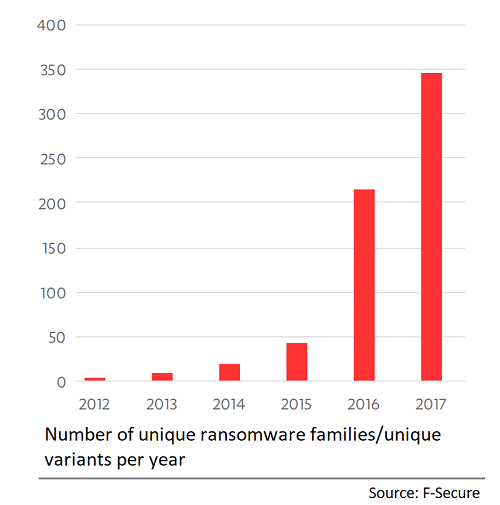
In a report, The Changing State of Ransomware, researchers reported that WannaCry along with friends Locky, Mole, Cerber, and Cryptolocker were the cool kids for 2017. Attacks by these and other ransomware rose by 415% over 2016. New types of ransomware increased by 62% reaching a whopping 343 unique strains.
The good news is that ransomware is beginning a downward trend. There are numerous theories for this, but one is that the attackers are not getting paid as much. It could also be because it’s easier to switch over to other methods for their payday, such as crypto-jacking. This involves using victim’s cyber resources to mine cryptocurrency, such as 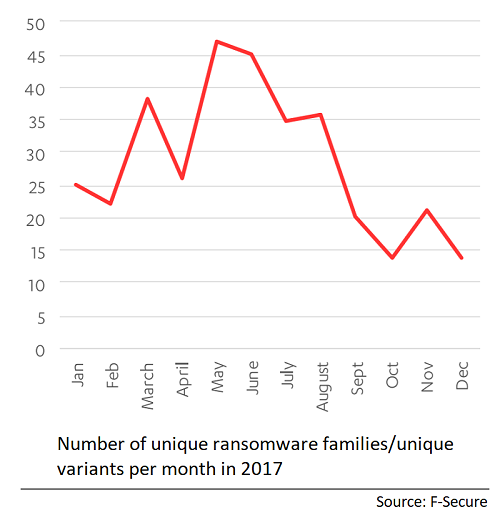 Bitcoin or Monero. It does not require the attacker to interact with the victims, it doesn’t require waiting on a payment, and the risk of being caught is even lower than with ransomware. It can make for a quick and lucrative payday.
That said, ransomware is still being used…a lot, particularly in the healthcare industry where the cybercriminals believe their targets are more likely to pay up.
Regardless of this downward trajectory, it is very important to make sure there are current backups of all of your important data. Then, should ransomware hit, instead of paying any money with a huge risk that your data still won’t be decrypted, you can restore it from that backup copy. In addition, because ransomware often takes advantage of unpatched systems, make sure to get any and all security and critical patches applied right away.
It’s not advised that anyone who is a victim of ransomware pay it. In many, if not most cases, the data is not successfully decrypted anyway and then the funds are just gone with nothing to show. Taking some time to make those backups is worth the effort.
For banks and credit unions
Share this article with your members
Copy a ready-made summary and link for your newsletter, website or social posts.