
You’d think that by now, we’d all know that cybersecurity is very important. After all, just open a news website and you will likely find at least a few stories every day about some kind of cyberattack, data breach, or cyber threat. However, weak security on computers and connected devices continues to be exploited by attackers. And recently attackers have been using Mirai-based code to do just that.
Mirai is a type of malware that targets Internet of Things (IoT) devices. These can be anything that connects to the internet, including doorbells and security cameras, electrical outlets, microwaves, and many toys and games. Even some refrigerators and toilets are connected to the internet these days. Mirai has also been affecting NAS (network attached storage) devices.
It emerged in 2016 when it was used to conduct significant distributed denial of service (DDoS) attacks, including against the website of cybersecurity expert and reporter, Brian Krebs. After that, the source code was released online and attackers are taking advantage. Variations on it, such as Okiru, Satori, and Masuta were created and more recent ones are now reportedly being used in an increasing number of attacks, creating botnets and stealing sensitive data from compromised devices.
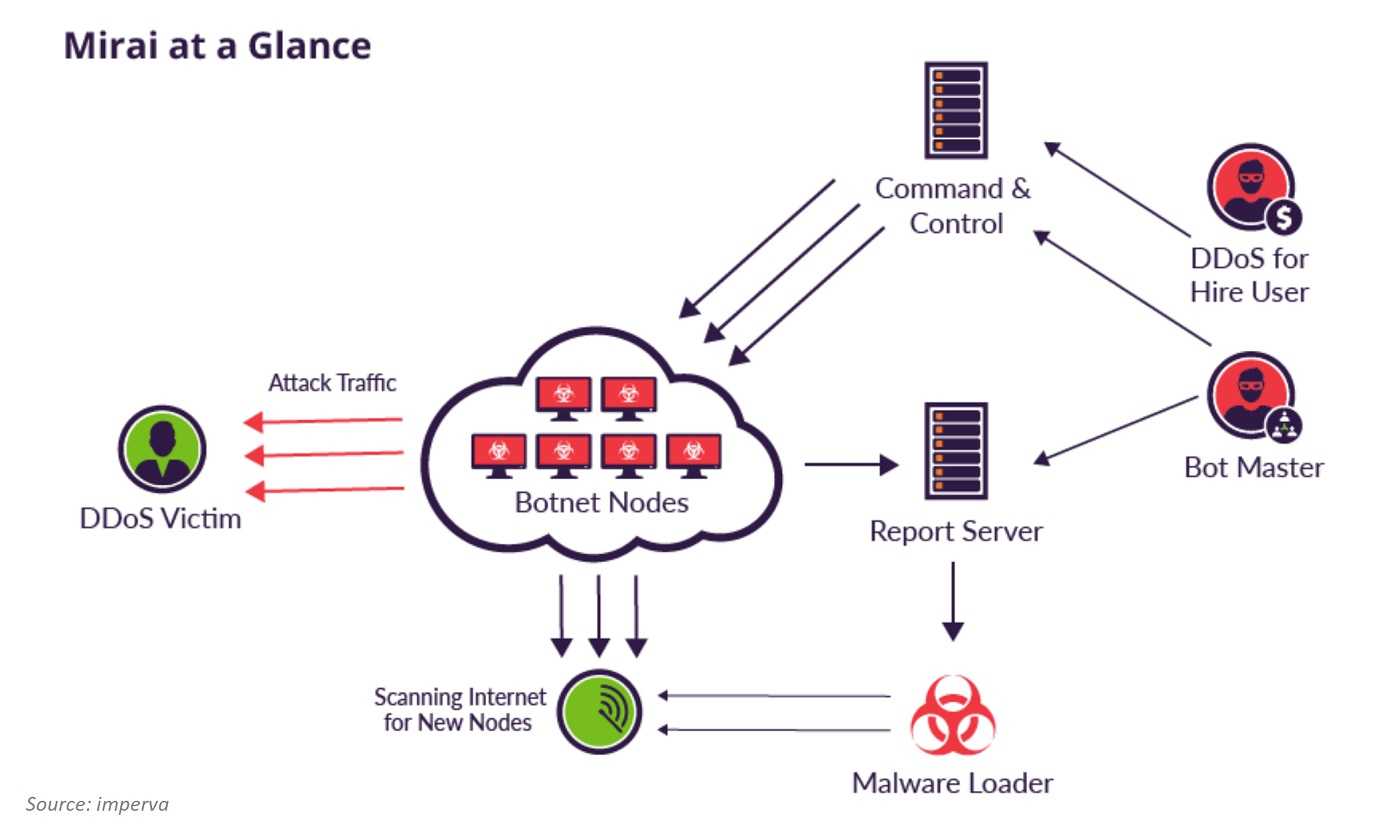
Research by Intel 471 found that there have been many botnets active over the past two years and those are now available for purchase, rent, and investment opportunities. This is yet more evidence that cybercrime is indeed a business. And it comes in the forms of malware-as-a- service far too often.
To mitigate these kinds of attacks, organizations should ensure that they have effective logging and monitoring in place on their devices and services. You should always change default passwords on any connected devices as soon as, or before they are connected if it’s possible, and keep devices and systems patched. Also, put together a cybersecurity policy and plan that includes what do to, when to do it, and who is responsible for each task, should an attack hit.
For banks and credit unions
Share this article with your members
Copy a ready-made summary and link for your newsletter, website or social posts.