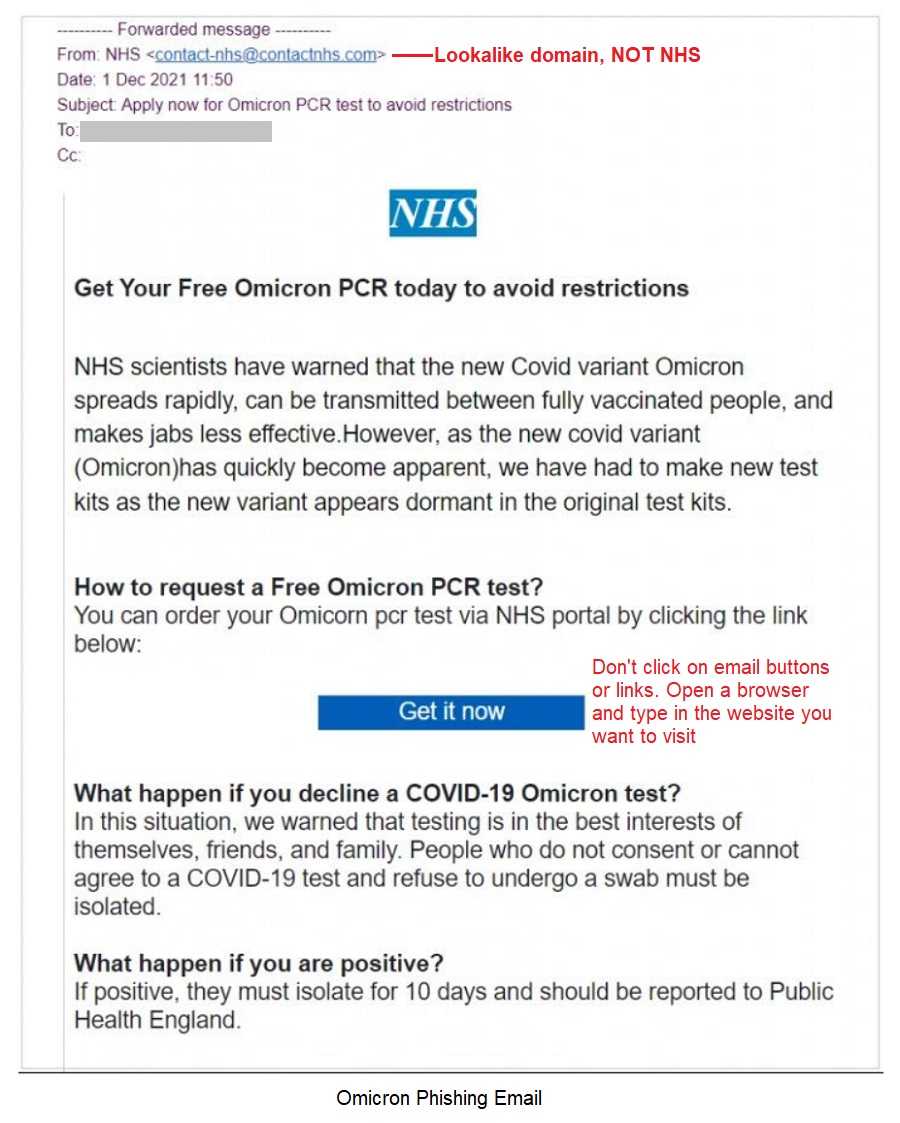
Scammers are continuing to take advantage of fears surrounding the seemingly never-ending coronavirus pandemic by using the omicron COVID variant as a lure in recent phishing scams. This one isn’t just targeting higher education. The consumer group, Which? reported seeing one where rogue sites actually charge delivery fees to get a COVID home test to your door. Well, as we know, those home tests are few and far between and that is the first clue that it’s a scam.
Another scam is going around like a bad case of the common cold. This one phishes for bank credentials. The scammers trick people into filling in those details in order to get an “Omicron PCR test.” And yet another one asks users to set up a security question (think mother’s maiden name), which just hands that PII (personally identifying information) right to the hackers.
Just in case you’re one of the few who haven’t taken a COVID test, this type of information isn't required for getting tested for COVID. However, if you provide it for one of the scams that are circulating out there, it may be abused by scammers to attack other legitimate accounts, including your financial ones.
Cyber criminals make use of current events to make their scams seem more convincing and they can be very difficult to spot. Look for clues of phishing in email messages such as misspelled words, missing punctuation, and generic greetings. Don’t click links or attachments that you aren’t expecting or from senders you don’t know. That’s just asking for trouble.
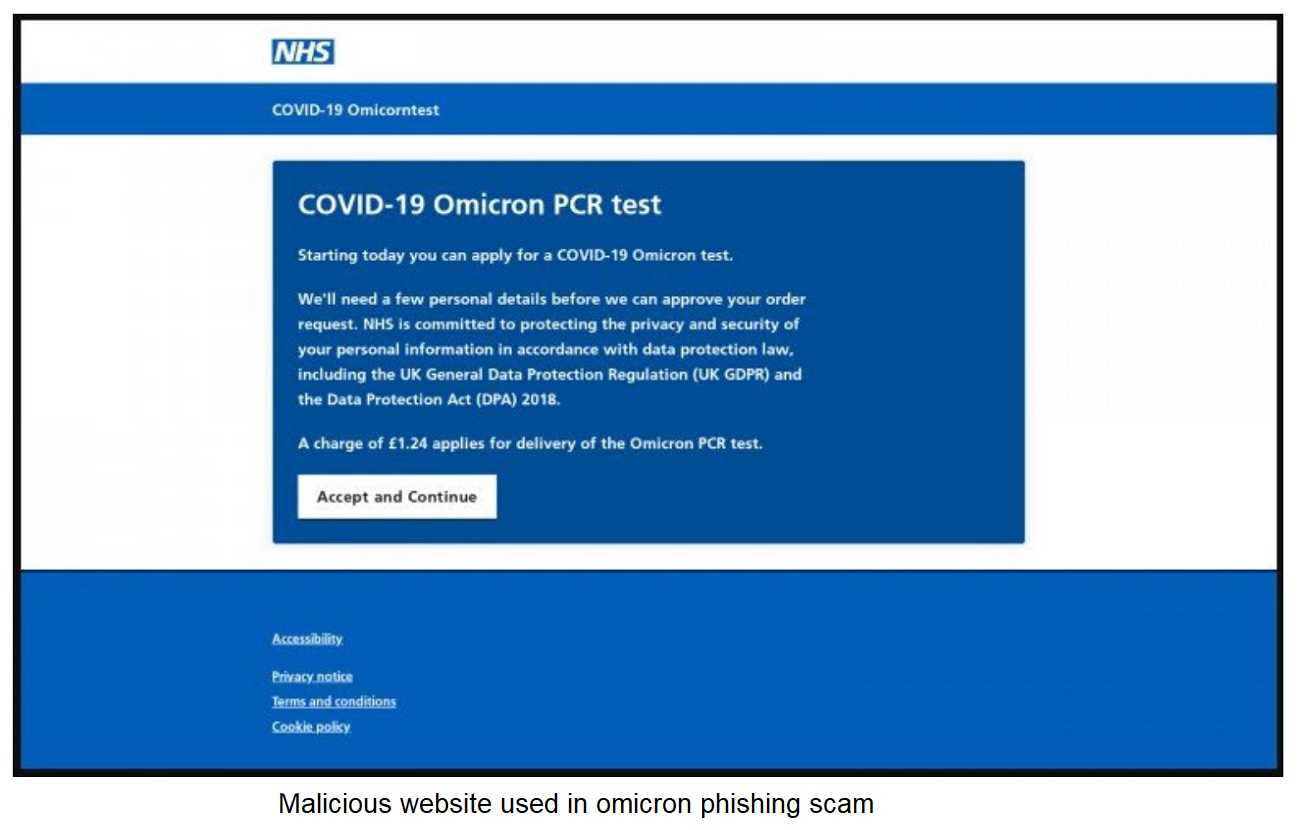
To mitigate your risk of becoming a victim of this scam, find out what information you are required to give in order to get a COVID test. Most of the time, it’s your name, physical address, birthdate, email address where the results will be sent, a phone number, and perhaps your insurance company and ID number. COVID testing (other than the cost of a home test) in the U.S. is free, so if anyone asks you to pay, it most likely is a scam.
For banks and credit unions
Share this article with your members
Copy a ready-made summary and link for your newsletter, website or social posts.