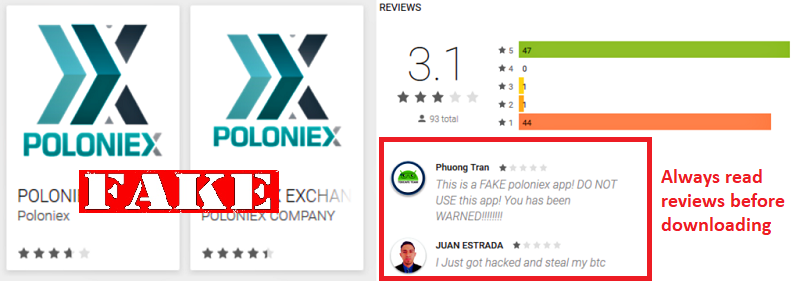
Yet another malware-laced fake app showed up on Google Play. Although that’s nothing new, the app involved is. It targeted Poloniex, one of the world’s largest cryptocurrency exchanges. The bogus app was discovered by a cybersecurity researcher who tweeted about his finding. Google Play Store removed the app shortly after the tweet was sent. This latest malware find is one of a growing number of hacks putting cryptocurrency users at risk. Many of the e-currency owners are now struggling to keep their accounts safe. Like many things, the sheer popularity of cryptocurrency provides growing targets for hackers.
The fake Poloniex app came on the heels of another malware app found on Google Play Store. It too is a copycat app, but this one targeted MyEtherWallet, a popular banking service for e-currency. Both infected apps used phishing expeditions to hack their way into financial accounts. However, these fake apps are only part of the budding list of cryptocurrency hacks. In other attacks, keystroking was used to steal the e-currency. Keystroking duplicates keyboard characters used by cryptocurrency account owners, providing hackers with login passwords and other critical account credentials.
 In all cases, unsuspecting account owners fell for copycat websites provided by hackers. Having to pay attention to detail to keep their accounts safe puts cryptocurrency owners on level footing with traditional currency users. There are actions e-currency owners can take to help keep it safe.
- Each cryptocurrency account should have its own email account.
- Use all the characters available to create your password
- Limit the amount of cryptocurrency on an exchange to only what you’re willing to trade
- Always type the exchange URL directly into the browser window
- Delete your browser history and cookies after signing out of an exchange
- Keep your cryptocurrency keys safely stashed away and private to you only. And avoid copy-paste when entering them. It may be more painful, but it will prevent it from being stolen with malware that targets that copy-paste functionality.
For banks and credit unions
Share this article with your members
Copy a ready-made summary and link for your newsletter, website or social posts.